During the October Champ Software webinar, Breanna Case, Operations Specialist for Webster County Health (Iowa), explained how her team found unexpected solutions after implementing their public health electronic health record (EHR) system. Follow this blog series to learn about the four surprising wins Webster County achieved.
Blog Series
Part 3: Seeing the Whole Picture
Bridging Public Health Data with Sustainable Reporting
Public health agencies often juggle multiple software systems — one for documentation, another for grants, and yet another for reporting and analytics. That fragmentation leads to inconsistencies, redundant work, and delays in accountability.
The Webster County Health Department discovered a different path once they switched to the Nightingale Notes EHR (Electronic Health Record) system.
“Our grants depend on reliable data,” says Breanna Case, Operations Specialist. “Now, I can pull a report for funders that matches exactly what staff in the field are using.”
The Cost of Disconnected Systems
When data is scattered across separate systems, teams spend undue time reconciling, validating, and chasing missing pieces. Agencies lose visibility about how programs interrelate and the struggle to align fiscal data with service metrics leads to discrepancies and reporting headaches.
Real-Time Insights in a Single Platform
With Nightingale Notes, what once required multiple exports and manual reconciliation now lives in a unified interface. Supervisors, program leads, and fiscal staff see the same datasets, consequently eliminating errors and enabling alignment.
Key benefits realized during the transition include:
- Seamless Grant Tracking & Reporting: Financials and performance metrics integrate automatically.
- Instant Reports on Demand: No waiting for vendor support or manual compilation.
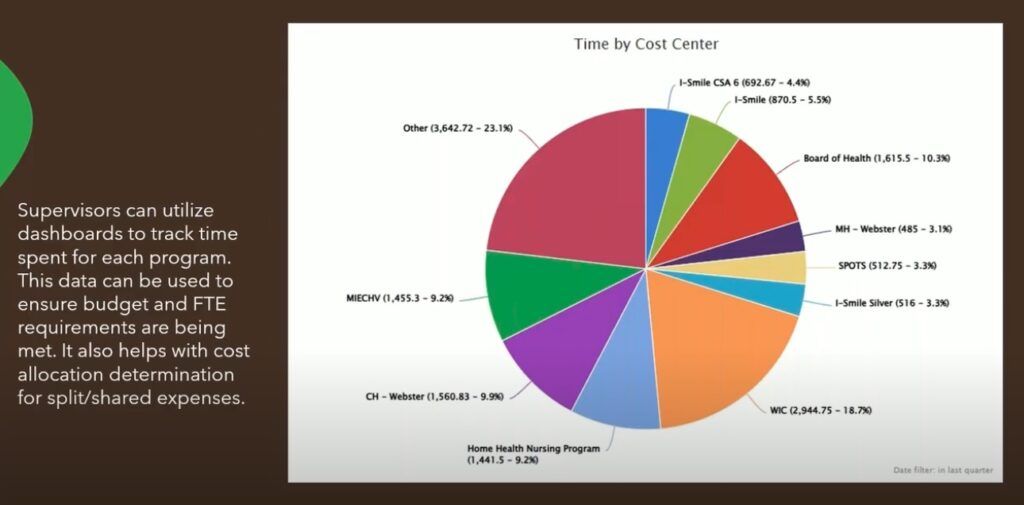
- Program Oversight: Dashboards show trends, funding utilization, and outcomes in real time.
Why a Public Health EHR Must Include Integration & Interoperability
A system built just for clinical care won’t suffice for public health agencies managing multiple programs, grants, and compliance. The CDC’s Public Health Data Strategy underscores the importance of modern, interoperable systems to help agencies share data efficiently, make faster decisions, and strengthen community health efforts (CDC Public Health Data Strategy).
Purpose-built public health EHRs combine documentation, fiscal tracking, and reporting into one integrated ecosystem — enabling departments to see the whole picture, not just isolated parts of it.
Last Blog in This Series
Watch a short excerpt from the full webinar video below: