
by Nicole Sowers based on an original post by Crystal Maertens
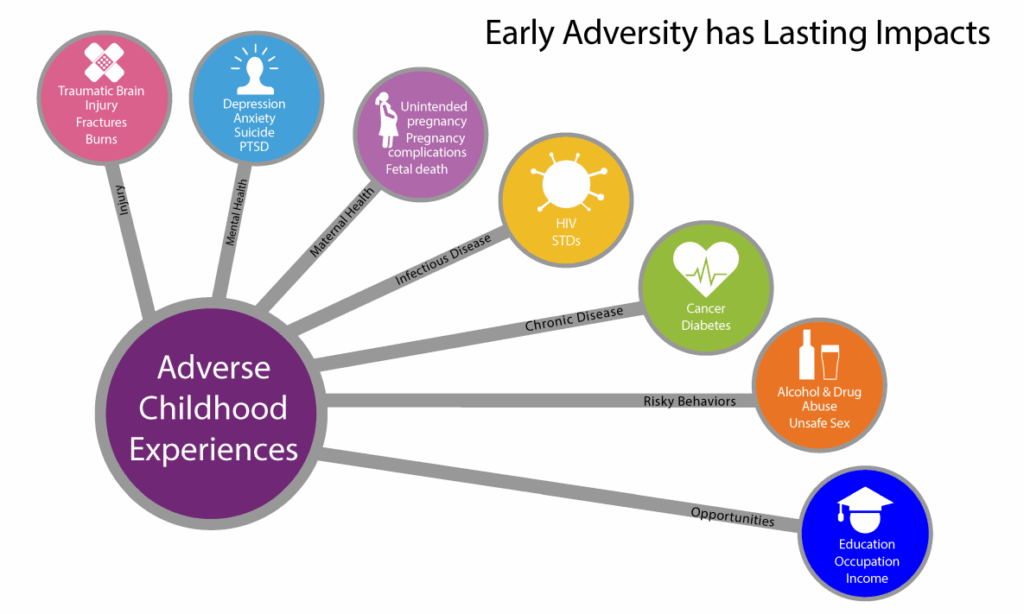
The previous blog defined Adverse Childhood Experiences (ACEs) and their impact on health. It also explained how ACEs, Bridges Out of Poverty, Social Determinants of Health and the Omaha System can work together. This blog explores actions public health workers can take related to ACEs.
Nightingale Notes EHR bridges data and practice by embedding the Omaha System in its workflow. It enables care teams to document ACE screenings, identify patterns and provide actionable insights at the community level.
Impacts of ACEs on Public Health
The cost of ACE-related health conditions nationally has been estimated as $14.1 trillion annually. (JAMA, 2023)
Karen Johnson, offers the view that generational racism should be included when calculating the cost of ACEs (Social Current). That is not part of the JAMA data. The American Public Health Association released a statement declaring, “Racism is an ongoing public health crisis that needs our attention now.” (APHA, 2020)
Penn Medicine posted that new research showed “that individuals exposed to ACEs are at increased risk of developing mood, anxiety, and substance use disorders. In part, the substance use disorder risk is related to the use of alcohol or drugs to self-medicate mood and anxiety disorders.”
Substance use disorders, and in particular opioid abuse puts a strain on many systems in the U.S.
The total financial impact nationally of Opioid use disorder (OUD) is estimated at approximately $4 trillion (Avalere Health, 2025). Public health agencies, especially at the local level, are on the frontlines for education, prevention and detection of opioid use. In 2017, the United States declared the opioid crisis a public health emergency. On September 18, 2025, that declaration was renewed.
OUD is just one area of public health related to ACEs. ACEs include 10 items under 2 primary categories. All of those categories fall squarely into the realm of public health:
- Maltreatment: Physical, sexual, and psychological abuse and physical and emotional neglect
- Parental Problems: Psychopathology, substance misuse, and three forms of family instability
What Can Public Health Workers Do?
Public health professionals play a crucial role in preventing and mitigating ACEs. Dr. Robert F. Anda, MD, MS — co-developer of the ACE Study — recommends several strategies in the video on ACEs:
- Education: Public health workers can educate the community at large and policy-makers on ACEs and their effects.
- Creation of standardized terminology: Public health workers can help create a standardized terminology for addressing and assessing ACEs. This is needed so the prevalence of ACEs, interventions used to address them, and outcomes of those interventions are measurable, communicable, understandable, and repeatable.
- Population-based or surveillance surveys to document the need. This is useful for obtaining funding and political support. Surveys also assist with program planning and evaluation, and surveillance helps maintain focus and momentum.
How ACEs Fit into the Foundational Public Health Responsibilities
The Foundational Public Health Services (FPHS) Framework defines the minimum set of services and capabilities every community should have. ACEs align closely with these responsibilities across multiple domains:
- Assessment and Surveillance — Screening for ACEs and tracking trauma exposure helps identify population needs and guide interventions.
- Policy Development and Assurance — Creating and implementing trauma-informed programs and resiliency-based care aligns with FPHS assurance functions.
- Community Partnership and Equity — Preventing and mitigating ACEs requires collaboration across housing, education, justice, and healthcare sectors. This is a cornerstone of the foundational public health model. (PHA Board, CDC Strategy for ACEs, MN Dept of Health)
Key EHR Features That Support Public Health Addressing ACEs
To truly advance population health, electronic health records (EHRs) must go beyond simple data storage. They need to support holistic, evidence-based care. An EHR should allow for documenting, screening, and addressing Adverse Childhood Experiences (ACEs). It should empower care teams to assess not only physical health, but also behavioral, environmental, and psychosocial factors that shape lifelong wellbeing.
A Common Language for Consistency
An effective EHR for public health practice includes structured, standardized data frameworks that enable meaningful documentation and reporting. Integration of the Omaha System provides a common language to capture client problems, interventions, and outcomes across environmental, psychosocial, physiological domains of health.

This structure allows public health nurses and community care teams to link ACE screenings and assessments to measurable goals and interventions, ensuring continuity and accountability in care.
Nightingale Notes by Champ Software exemplifies how EHRs can bridge data and practice. By embedding the Omaha System within its workflow, Nightingale Notes enables care teams to document ACE screenings and follow-up care plans with consistency and precision.
Strong EHR design supports care planning across the full scope of an individual’s life and experiences. It must allow for tracking of not only symptoms and diagnoses, but also the client’s knowledge, behavior, and status related to health and resilience. Through this integrated approach, providers can visualize trends, track outcomes, and monitor change at the individual and community level.
Data for Actionable Insight
The ability to aggregate and analyze ACE-related data within an EHR, like Nightingale Notes, transforms documentation into actionable insight. Public health agencies can identify patterns, allocate resources effectively, and measure the impact of trauma-informed interventions over time. In this way, data becomes a catalyst for change—empowering care teams to deliver more responsive, equitable, and preventive services.
By aligning data collection, assessment, and intervention within a standardized framework; EHRs, such as Nightingale Notes, transform ACE screening from a one-time assessment into an ongoing process of healing, learning, and community-level improvement.
An example care plan using the Omaha System to enable documentation around ACEs using Nightingale Notes EHR:
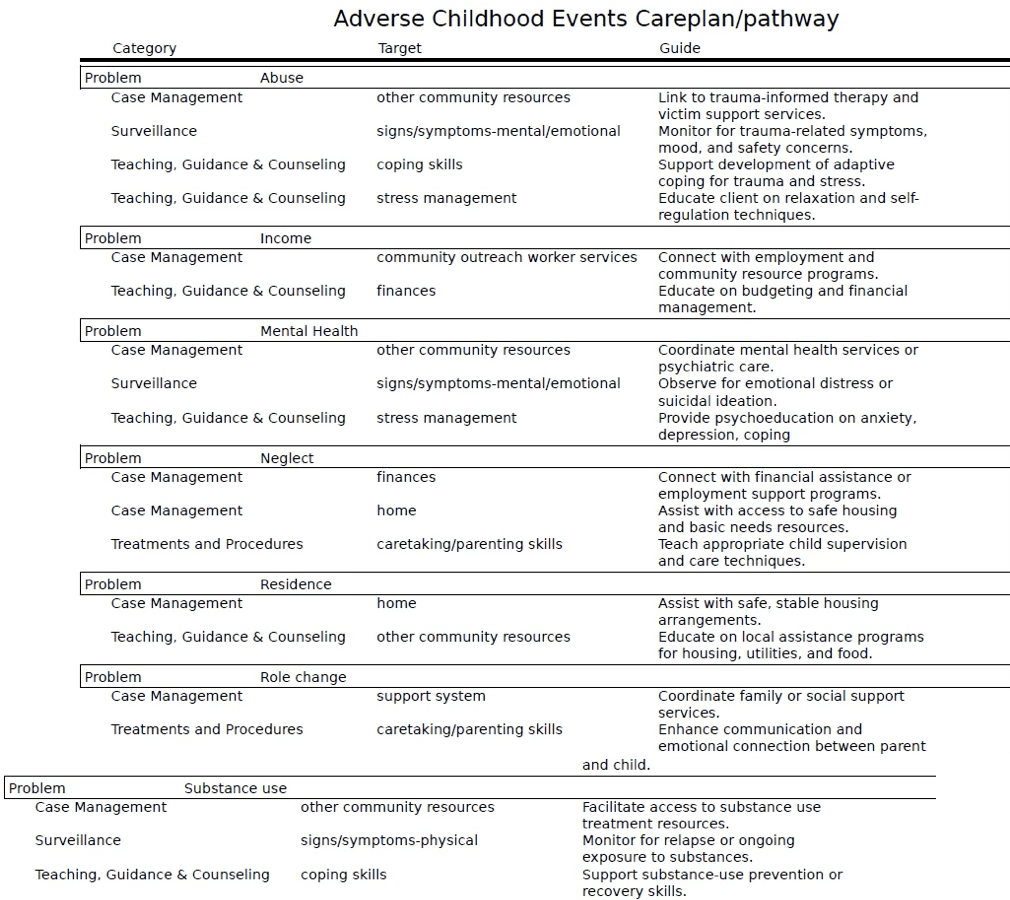
Many public health agencies have successfully used Nightingale Notes to document outcomes and support trauma-informed care. By embedding ACEs screening and care plans into routine workflows, Nightingale Notes helps identify at-risk individuals earlier and document community-wide progress.
Tools and Resources for Addressing Community Health Through Trauma-Informed Care
- CDC: Preventing Adverse Childhood Experiences (ACEs)
- ACESTooHigh – Resources and Community Stories
- Minnesota Department of Health – ACEs & Resilience
- Bridges Out of Poverty Blog – Champ Software
References
- American Public Health Association (APHA), May, 2020
- Avalere Health, May 2025
- CDC Public Health Strategy for ACEs
- Center for Child Counseling, August 2, 2018, “Resilience, A Powerful Weapon in the Fight Against ACEs“
- JAMA December 6, 2023
- Minnesota Department of Health, Foundational Public Health Responsiblities and Framework
- Penn Medicine, May, 2020
- PHABoard.org, Foundational Public Health Services
- Social Current, Mar, 2024