
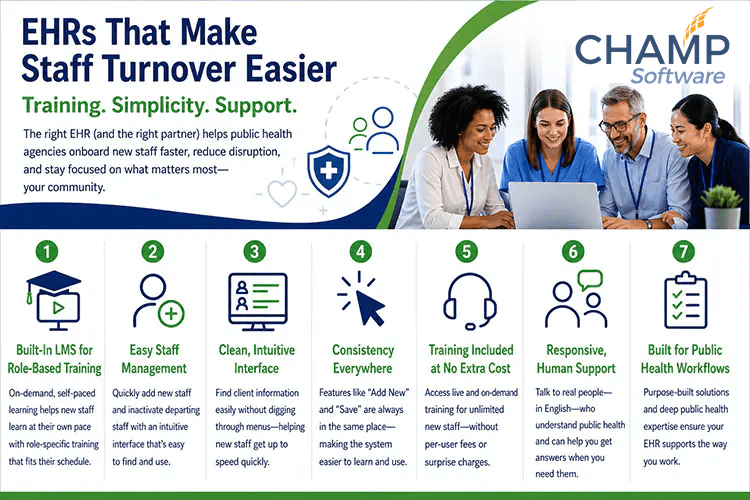
How Public Health EHRs SHOULD Help Handle Staff Turnover Gracefully
Staff turnover is a constant reality in public health. Whether driven by funding cycles, burnout, retirements, promotions, or shifting community needs, agencies regularly onboard new clinicians, administrators, billers, supervisors, and support staff. The challenge is not just replacing people. The challenge is maintaining continuity of care, compliance, reporting accuracy, and staff confidence while roles are changing.
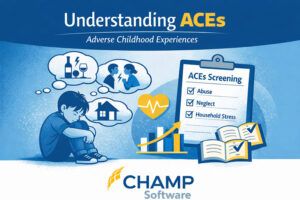
Understanding ACEs: Public Health Can Screen, Document, Track Outcomes
Learn how Adverse Childhood Experiences (ACEs) impact long-term health, why ACEs screening matters for public health, and how Nightingale Notes supports trauma-informed documentation using the Omaha System.
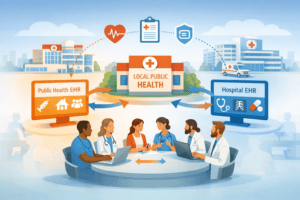
Statewide EHR Decisions a Big Opportunity – IF Public Health Supported
Statewide EHR Modernization Works Best When Local Public Health Has a Seat at the Table. The best approach is two systems, hospital and public health that share data.
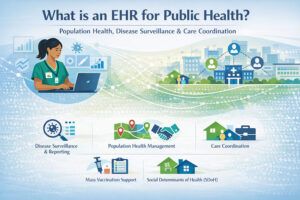
What is a Public Health Electronic Health Record (EHR)
Article answers the question, What is a public health EHR? A Public Health EHR (Electronic Health Record) is a designed to support public health agencies in managing patient and population-level data. Unlike traditional EHRs that document individual clinical encounters, Public Health EHRs emphasize population health, disease surveillance, regulatory reporting, and community-wide care coordination.

Standardized Language: Importance for EHRs and Public Health Documentation
The Omaha System provides a holistic, interdisciplinary structure that covers environmental, psychosocial, physiological and health-related behavior. For EHRs, standardized languages, like the Omaha System, improve data quality, interoperability, outcomes measurement and reporting.
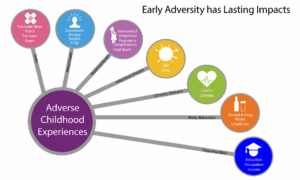
Adverse Childhood Experiences Impact on Long-Term Health: Public Health Lens- 2
Public health workers, especially with a strong EHR, can take actions to prevent, mitigate and measure Adverse Childhood Experiences (ACEs) which have long-term negative health impacts.
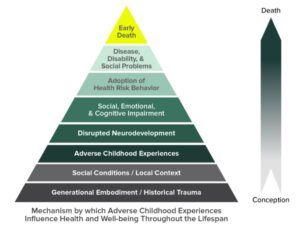
Adverse Childhood Experiences Impact on Long-Term Health: Public Health Lens- 1
Adverse Childhood Experiences impact long-term health. Documentation of ACEs screenings can help identify patterns and provide actionable insights.
Redefining Value — When an EHR Becomes a Public Health Improvement Tool
Part 4 in a 4 part series on how Webster County found Unexpected Wins with their Public Health EHR, Nightingale Notes.
Seeing the Whole Picture — Grant Management, Reporting, and Data Visibility in One System
Part 3 in a 4 part series on how Webster County found Unexpected Wins with their Public Health EHR, Nightingale Notes.